What Is a Sniff Walk for Dogs, Really
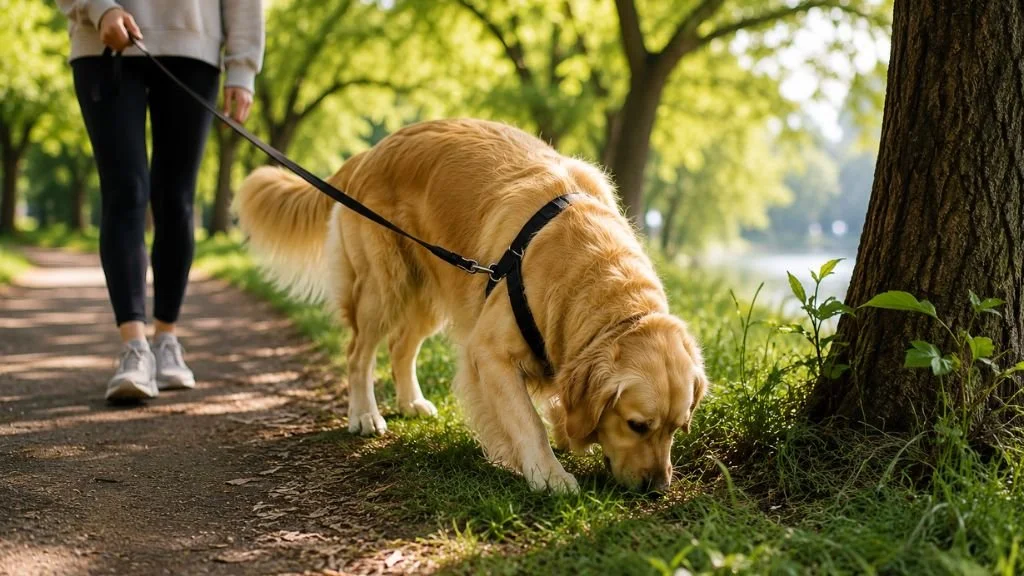
If you have ever let your dog stop and smell every single blade of grass, fire hydrant, and random patch of sidewalk on your walk, you have already experienced a sniff walk - you just did not have a name for it.
A sniff walk is exactly what it sounds like: a walk where your dog leads with their nose. Instead of maintaining a brisk pace or staying in a heel position, the dog is allowed to stop, explore, and sniff as much as they want. It sounds simple, but the science behind sniff walks is surprisingly powerful.
Why a Dog's Nose Changes Everything
Dogs experience the world almost entirely through odor. Their sense of smell is estimated to be 10,000 to 100,000 times more sensitive than a human's, according to researchers who study detection dog behavior. That is not a typo. Your dog's nose is picking up an overwhelming amount of information every time it touches the ground.
When a dog sniffs, the brain lights up with activity. The olfactory system in a dog's brain is proportionally massive compared to ours, and it connects directly to the parts of the brain responsible for memory, emotion, and behavior. Sniffing is not just curiosity - it is how dogs make sense of their environment.
What Makes a Sniff Walk Different From a Regular Walk
A regular walk often prioritizes the human's pace and goals. You want exercise. You want to cover distance. You might want your dog to stay focused and walk nicely on the leash.
A sniff walk flips that priority. The dog's nose sets the pace. You follow. This is not about structure - it is about giving your pet a moment of genuine freedom within a safe, leash-guided environment.
Think of it this way: if you were taken to a museum and told to walk through without looking at anything, you would leave feeling strangely empty, even if you covered all the rooms. A sniff walk lets your dog actually look around.
The Mental and Physical Benefits Are Real
Here is what surprises a lot of pet owners: a 20-minute sniff walk can tire a dog out more than a 45-minute power walk. That is not an exaggeration - it reflects how much mental stimulation dogs get when they are actively processing thousands of odors at once.
Sniffing triggers the release of dopamine, the feel-good chemical in the brain. It activates your dog's instinct to track and investigate. This kind of behavioral enrichment is increasingly recommended by veterinary behaviorists and animal welfare experts as a core part of a dog's well-being.
For Anxious Dogs, Sniffing Is Medicine
Stress and anxiety in dogs often show up as destructive behavior, excessive barking, or restlessness at home. Giving a dog regular opportunities to sniff and explore can reduce anxiety by allowing their nervous system to regulate through natural, instinct-driven behavior.
A sniff walk essentially tells your dog's body: you are safe, you are free, and this environment belongs to you right now. That message does more for mental health than most people realize.
For Senior Dogs, It Is Still Exercise
Older dogs may not be able to run or play like they used to, but their nose never ages out. A gentle sniff walk keeps a senior dog engaged and active without straining joints or overexerting the body. It respects where they are physically while still feeding their mind.
This is one reason why professional dog walkers who work with senior pets often build sniff-friendly routes into their routines by default.
What Freshpet and animal researchers are saying
Brands like Freshpet and animal behavior organizations have helped bring sniff walk culture into mainstream pet conversations. The research consistently backs up what experienced walkers and trainers have observed for years: dogs who are given regular mental stimulation through sniffing show better behavior, reduced stress, and improved overall health.
This is behavioral enrichment in action. It is the same principle that zoos use with animals in captivity to keep their minds active and their instincts engaged.
How to Do a Sniff Walk Correctly
You do not need equipment or training to start. Here is how to approach it:
Choose a low-distraction route the first time, like a grassy area or quiet path
Keep the leash loose and let your dog decide where to go
Resist the urge to pull them along when they stop
Set a time goal rather than a distance goal - 15 to 20 minutes is a solid start
Put your phone away and just observe your dog's behavior
The goal is to let them lead. You are not training anything. You are just giving your dog permission to be a dog.
Common Questions About Sniff Walks
Is a sniff walk enough physical exercise on its own?
For most healthy adult dogs, probably not on its own. But paired with regular walks, it makes a significant difference in overall well-being. For senior or low-energy dogs, it can absolutely be enough.
How often should I do sniff walks?
Daily is ideal, but even a few times a week can have a noticeable impact on your dog's behavior and mood. Many professional dog walkers incorporate sniff time into their regular walk routines without making it a separate outing.
Can any dog benefit from sniff walks?
Yes. Whether your pet is a high-energy puppy or a calm senior, sniffing is a core part of how all dogs process the world. Every dog benefits from having that instinct honored.
Why Sniff Walks Belong in Your Dog’s Routine
A sniff walk is one of the simplest, most underrated things you can do for your dog's health and happiness. It costs nothing, requires no training, and works for every age and breed. If you want professional walks that respect your dog's natural needs - including time to explore and sniff - learn more about what a dedicated dog walking service can offer your pet every day.