Decompression Walks Calm Dogs Faster Than Any Training Trick
Most dog owners have tried everything. New commands, better treats, puppy classes, YouTube tutorials. And yet, the dog still comes home wired, anxious, or impossible to settle. What if the missing piece had nothing to do with training at all?
That is where decompression walks come in. They are not a trend, and they are not complicated. But they do require a shift in how you think about what your dog actually needs from a walk.
What Is a Decompression Walk?
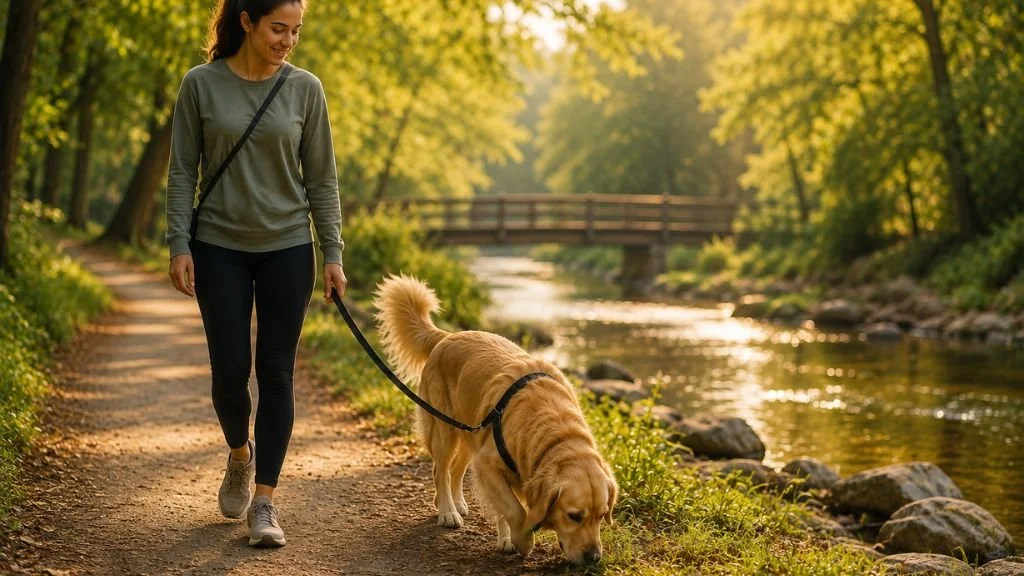
A decompression walk is a low-structure outing designed to let your dog move freely, sniff at will, and follow their nose without constant direction from you. Instead of heeling on a tight leash beside the sidewalk, your dog gets a long line, usually 15 to 30 feet, and the freedom to explore at their own pace.
The concept has been widely discussed by dog behavior professionals, including Sarah Stremming, a well-known dog trainer and podcast host who has written and spoken extensively about the psychological stress dogs carry when they never get true mental and physical freedom on their walks.
The goal is simple: give your dog's brain a chance to decompress, the same way a stressed human might need a long, quiet walk in the woods rather than a trip to a crowded gym.
Why Your Dog's Brain Needs More Than Exercise
Exercise matters. But physical exercise alone does not address the full picture of your dog's mental health. Dogs are scavenger-hunters by nature. Their brains are wired for sniffing, tracking, and exploring. When that need goes unmet, stress builds up.
Think of sniffing behavior as your dog's version of reading the news, checking social media, and solving a puzzle, all at once. It is deeply stimulating in a way that trotting next to you on the sidewalk simply cannot replicate.
Research in animal behavior supports this. Sniffing activates the brain in ways that reduce anxiety and lower cortisol, the stress hormone. A dog who spends 20 minutes with their nose in the grass processes more mental stimulation than they would during a brisk 45-minute structured walk.
The Difference Between a Walk and a Decompression Walk
A regular on-leash walk has rules. Stay close, do not pull, keep moving, ignore distractions. For many dogs, that level of constant redirection creates its own psychological stress.
A decompression walk removes most of those rules. The dog leads. They stop when they want. They sniff for as long as they need. They change direction without being corrected. This freedom of movement is not just enjoyable for dogs - it is genuinely therapeutic.
Signs Your Dog Needs Decompression Time
Not every dog shows stress the same way, but there are common signals worth watching for.
A dog that is hard to settle after walks, that barks excessively, that chews destructively, or that struggles to relax in the house may not need more training. They may need more decompression. Dogs with anxiety, fearful behavior, or high reactivity on leash often benefit the most from this approach.
Puppies, in particular, carry a lot of stimulation from the world around them. Their brains are absorbing everything - sounds, smells, textures, movement. A puppy that gets regular decompression time tends to develop confidence faster and shows fewer fear-based behaviors as they mature.
Even senior dogs benefit. Lower-impact exploration on a long line keeps them mentally engaged and physically moving without overexertion.
How to Do a Decompression Walk the Right Way
You do not need a trail or a snowy field to make this work. Parks, quiet green spaces, and low-traffic areas in Columbus are all good options. The key is choosing a space where your dog can move off the beaten path without constant interruptions.
Here is how to approach it:
Use a long line (15 to 30 feet), not a retractable leash. Retractable leashes create tension and limit true freedom of movement.
Let your dog choose the direction. Your job is to follow, not lead.
Resist the urge to redirect sniffing. If your dog wants to spend five minutes on one spot, let them.
Stay quiet. Minimal talking, minimal commands. This is their time, not a training session.
Aim for at least 20 to 30 minutes. Short sniff breaks do not have the same effect as extended decompression time.
You do not have to abandon structured walks entirely. Many dog owners find that combining one or two decompression outings per week with regular daily walks makes a noticeable difference in behavior at home.
What to Expect Afterward
After a proper decompression walk, most dogs are visibly calmer. They settle more easily, sleep more soundly, and show less of the restless, anxious behavior that frustrated their owners before. The effect can be striking, especially for dogs that have been stuck in a cycle of under-stimulation masked as behavior problems.
It does not replace good dog training when training is genuinely needed. But for many pets, it removes enough stress that behavior improves on its own without any additional intervention.
How Professional Dog Walking Supports Decompression
For busy pet owners in Columbus, finding the time and the right space for daily decompression outings can be a real challenge. That is where professional dog walking becomes more than just a convenience.
A skilled dog walker who understands dog behavior can build decompression time into your dog's routine consistently. Consistency matters here. A single long sniff session helps, but regular decompression over weeks and months is what produces lasting changes in a dog's stress levels and overall health.
At Happy Tails Pet Care, walks are designed with the individual dog in mind. Whether your dog is a bouncy puppy that needs freedom to explore or an anxious adult dog that needs space and calm, the approach is adjusted to fit what that dog actually needs - not a one-size-fits-all pace around the block.
Frequently Asked Questions
Does decompression walking replace training?
Not exactly. It is best thought of as a complement to good dog training, not a replacement. It reduces the psychological stress that makes training harder, which means dogs often learn faster when decompression is part of their routine.
Can I do a decompression walk on a regular leash?
A standard 6-foot leash is too restrictive to allow real freedom of movement. A long line is important for making this work properly.
How often should my dog get a decompression walk?
Even two or three times per week can make a meaningful difference. Daily sessions are ideal for high-anxiety dogs or puppies.
Is this safe in a city environment?
Yes, with the right long line and a space that offers some separation from heavy traffic. Parks and open green areas in Columbus work well for this.
Why Decompression Walks Help Dogs Reset
Decompression walks are one of the most underused tools in dog care. They cost nothing, require no special equipment beyond a long line, and can transform a stressed, restless dog into a calmer, more settled companion faster than most people expect.
If your dog has been struggling, this is worth trying before adding another training program to the list. To learn more about how consistent, thoughtful walks can support your dog's behavior and health, explore Happy Tails Pet Care's dog walking services.