How Soon Can I Walk My Dog After Being Spayed?
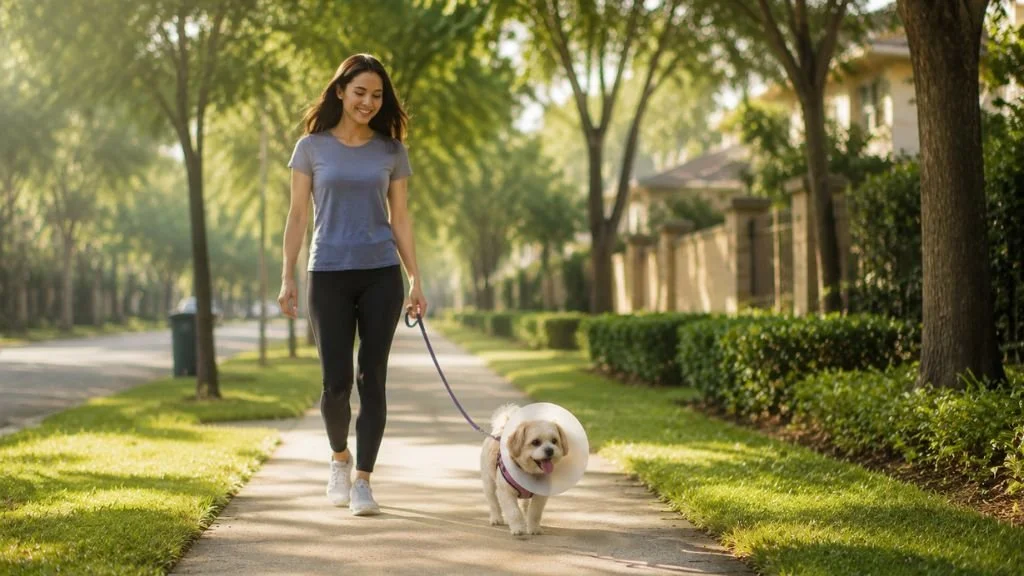
Disclaimer: This article is for general educational purposes only and should not replace advice from your veterinarian. Every dog’s recovery after spay surgery can be different. Always follow your vet’s post-operative instructions, and contact them right away if you notice swelling, discharge, unusual pain, vomiting, extreme lethargy, loss of appetite, or an incision that appears to be opening.
Your dog just had surgery, and now she is home, groggy, and wearing that dreaded Elizabethan collar. You are probably staring at her leash, wondering when life can go back to normal. It is a fair question, especially if your dog is used to regular walks, daily potty breaks, or a consistent dog walking routine.
At Happy Tails, we know walks are more than exercise. They give dogs structure, comfort, and a sense of normalcy. But after a spay surgery, the priority is not getting back to long strolls right away. It is making sure your dog heals safely before returning to her usual walking schedule.
Getting the timing right on post-spay exercise is not just about following rules. It is about keeping your dog calm and cared for, preventing complications, and making sure the surgical incision heals the way it should.
The Short Answer: Give It At Least 14 Days
Most veterinarians recommend restricting physical activity for a minimum of 14 days after a spay surgery. That means no running, no jumping, no rough play, and no long walks during that window.
Short, controlled bathroom trips outside on a leash are generally okay from day one, but these should be brief and calm. Think five minutes, not fifteen. Your dog's uterus has been removed, internal sutures are healing, and any excess movement can cause serious problems.
Why Rest Is So Critical After a Spay
A spay is a significant abdominal surgery. It is not a simple procedure like getting a tattoo. The veterinarian removes your dog's uterus and ovaries, which means there are both internal and external layers that need time to heal properly.
When a dog is too active too soon, those sutures can tear. This can lead to internal bleeding, a painful infection, or a condition called endometritis if any tissue becomes inflamed. These are not minor setbacks. In some cases, complications require emergency medicine and a return trip to the clinic.
The hormones your dog's body produced before surgery also take time to settle. Behavior can shift a bit during recovery, and some dogs feel more anxious or restless as a result. Rest supports both physical and emotional healing.
What "Restricted Activity" Actually Means
This is where a lot of pet owners get confused. Restricted activity does not mean your dog cannot move at all. It means you are managing and limiting her movement with intention.
Here is a practical way to think about it during those first 14 days:
Leash walks only, even in your backyard
Short trips outside for bathroom needs, no longer than 5 to 10 minutes
No stairs if you can avoid them, especially in the first week
No jumping on or off furniture - consider blocking access with a baby gate
Separate her from other pets who might play too roughly
If your dog is used to high-energy walks or plays with a puppy or adult dog at home, this period requires active supervision and a real change in routine.
How a Dog Walking Service Can Help After Recovery
During the first part of recovery, your veterinarian may only allow very short, leash-only bathroom breaks. This is not the time for normal dog walks, play sessions, or extra activity. However, once your vet says your dog can slowly return to walking, a professional dog walking service can help make that transition safer and more consistent.
A careful dog walker can follow your vet’s activity limits, keep walks calm and controlled, avoid rough play, and help your dog ease back into a routine without overdoing it. This can be especially helpful for busy pet owners who want their dog to get attention and structure while still respecting the recovery timeline.
If your dog is recovering from surgery, always share your veterinarian’s instructions before scheduling walks. A good dog walking plan should support your dog’s healing, not rush it.
The Elizabethan Collar and Why It Stays On
The Elizabethan collar - that cone your dog is desperately trying to escape - exists for a good reason. Dogs instinctively want to lick their incision site, which introduces bacteria and significantly raises the risk of infection.
Some pet owners ask about using an infant bodysuit or onesie as an alternative to the cone. Some dogs struggle with a traditional Elizabethan collar, but it still plays an important role in preventing licking, chewing, and infection at the incision site. In some cases, a veterinarian may recommend a soft recovery suit or onesie as an alternative. Before using one, ask your vet whether it is appropriate for your dog and make sure the incision stays clean, dry, fully protected, and easy to monitor.
Do not skip this step. A healing surgical wound and a dog's tongue are not a good combination.
Signs That Something Is Wrong
You know your dog. If something feels off during recovery, trust that instinct and contact your veterinarian or a spay and neuter clinic right away.
Watch for these warning signs:
Swelling, redness, or discharge at the incision site
Signs of significant pain, like whimpering, guarding the abdomen, or refusing to move
Lethargy that seems extreme even for a post-surgery dog
Vomiting or loss of appetite beyond the first 24 hours
The incision opening or a band of tissue appearing around the wound
These symptoms need professional attention quickly. Do not wait and see if they improve on their own.
When Can Normal Walks Resume?
After the 14-day mark, your veterinarian will typically do a follow-up check to assess how the incision is healing. If everything looks good, you can begin gradually reintroducing exercise.
Start with slightly longer leash walks and monitor how your dog responds. If she seems comfortable and there is no swelling or irritation at the incision site, you can slowly build back up to her normal routine over the following week or two.
Keep in mind that neutering a male dog has a shorter recovery window than spaying a female, so do not compare timelines if you have both at home.
How Soon Can Your Dog Start Walking Again?
The two weeks after a spay surgery are critical for your dog's recovery. Short leash walks are usually fine for bathroom trips, but real exercise needs to wait until your veterinarian gives the green light.
Once your dog is cleared for more activity, return to walks slowly. Start with short, calm outings and watch for signs of discomfort, swelling, or tiredness. If everything looks good, you can gradually build back up to her regular walking routine.
If your schedule makes it hard to manage consistent, controlled walks after recovery, Happy Tails can help. Our dog walking services are designed to give dogs safe, structured, one-on-one attention based on their needs. With the right timing, your pup can get back to enjoying her walks while you feel confident she is being cared for properly.